June 2014
It has been said that the poetry of a garden is found in the appreciation of “simple things at their true high worth.”
This sentiment speaks to the spirit of the simple perennial gardens that became popular in the 1880s following the U.S. Centennial. Such gardens remained in vogue throughout the early decades of the twentieth century, peaking in the 1920s.
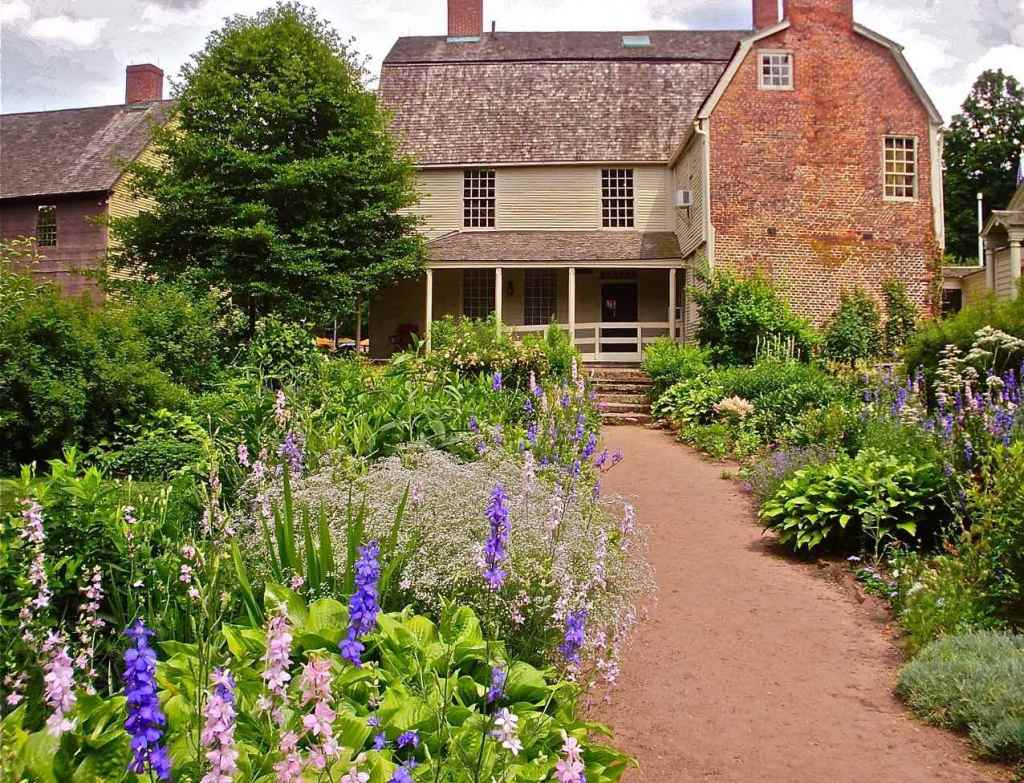
With their axial paths and emphasis on heirloom plants instead of imported or hothouse varieties, these gardens were initially intended to convey an air of classical simplicity. Herbs and vegetables were often included to call to mind the utilitarian ethos of America’s past.
The integration of decorative flourishes such as arbors and sundials, and the addition of a rich array of romantic flowering plants, ultimately made these gardens unique products of their own time.

A hallmark of the style was the incorporation of hardy perennials, similar to what would have been found in a quintessential English cottage garden, giving such gardens a heightened element of nostalgia.
And, laden with nectar as they tend to be, these flowers are also favorites for pollinating species.
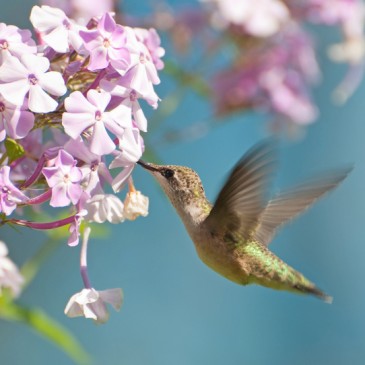
As we continue with our two-part series on pollinators, today we’ll take a look at the Webb-Deane-Stevens Museum in Wethersfield. The museum is home to a perennial garden designed by landscape architect Amy Cogswell in 1921. Most of the plant species that Cogswell selected still remain part of the landscape today.
Whether Amy Cogswell took pollinators into account while designing the garden, we may never know. But her original plans specify generous quantities of Delphinium, Heliotrope, Phlox, Dianthus, Iris, and Aquilegia (Columbine), all of which attract some of the prettiest things on two wings.
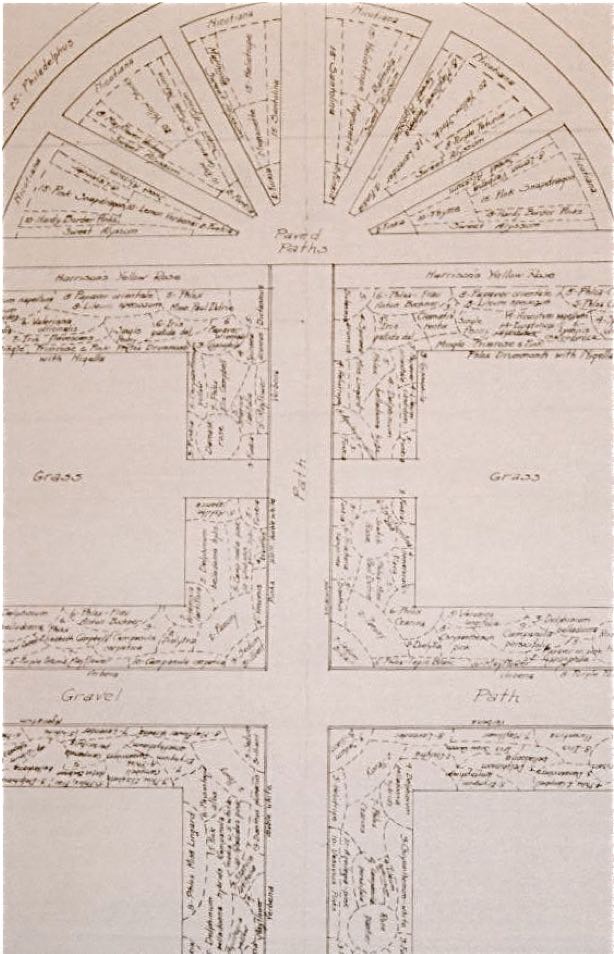
Today, this historic garden is maintained by the Garden Angels, a volunteer team headed by master gardener Rose Riley, along with garden volunteer coordinator and researcher Ann Foley. She leads tours of the three historic houses on the property, as well as tours of the garden.
On the tour, I learned that Amy Cogswell was the long-time principal of the Lowethorpe School in Massachusetts, one of the first schools where women could obtain training in landscape architecture, gardening, and horticulture. In addition to her own private commissions as a well-known designer, she also worked with the Olmstead Brothers and with Fiske Kimball on a never-installed garden at Monticello.
Cogswell’s design for the garden at the Webb-Deane-Stevens House divided the landscape into quadrants, each with a flowering tree, including a lovely almond, a dwarf saucer magnolia, a cornice dogwood, and a crabapple.
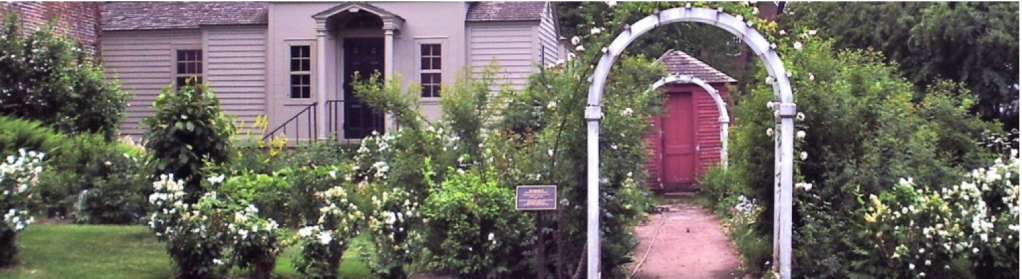
Some plant substitutions have since been implemented. The Sea Holly and Dwarf Mock Orange from Cogswell’s original design now blend with self-sowing annuals such as Nigella (‘Love in a Mist’). A favorite of hummingbird moths, the dwarf mock orange produces a fragrant cloud of blossoms in springtime.
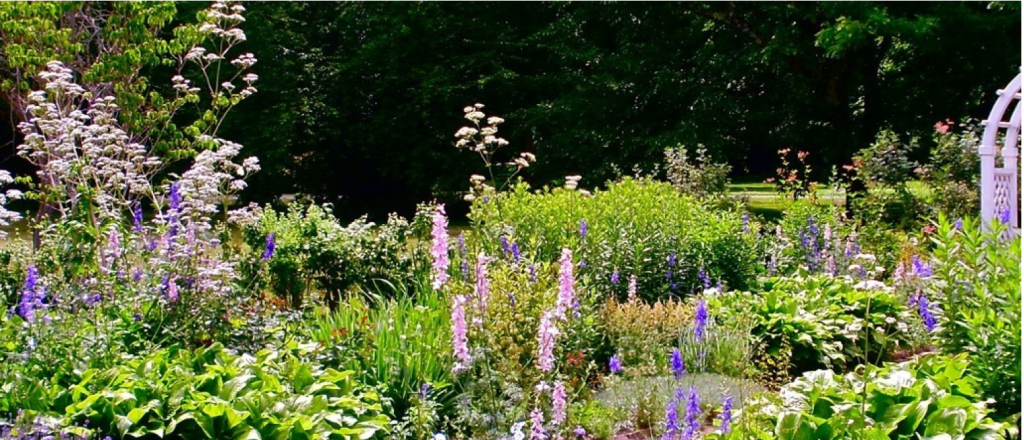
It’s no surprise to find this landscape as a beehive of activity. Master gardener Rose Riley happily shares this space with an assortment of creatures, and if you happen to visit while she’s working, she’ll gladly offer up a few gossamer thoughts on the subject. Do plan a visit this summer or come drop by.
 jenevievecarlyn.com
